I’ve been to London to see the…..

Getting the best out of remote and digital general practice

Image of Houses of Parliament

Some of you will know I live in beautiful scenic Cumbria. So, you’ll have an understanding all about lack of public transport and how flipping hard it is to get anywhere in a hurry.

Some of you will also know that I have a touch of FOMO, so when I get an invite to two things at the same time, I struggle to decide and often think, maybe I can do both.

The dilemma

Our Redmoor team were having a redesign session on 24th April, partly in response to some NHS contract changes, partly because we’re 12month into one programme and 3years into another and we wanted to reflect.  Also, because we want to look forward and make sure that our products and services support a hugely stressed system in General Practice, and we have the expertise in the team to help.  

Then, I get this invite to an event presenting the findings of quality research by the teams at Oxford, Plymouth and the Nuffield Trust, delivered in the House of Commons, for MPs to listen in order to understand the issues and complexity of modern general practice remote care.  The research team have created this summary to share, so that others can learn from the 2-year study and build the findings into their work. 

I’ve been involved on the edges, as part of the expert advisory group and as a participant in a series of workshops, but this is very much part of my everyday work and something I’ve been passionate about in the NHS for many years.  How could I turn that invite down.

I decided to attempt to do both sessions.  One from the train, the other in person. 

Plan for the unexpected

What I didn’t plan for was a horse event, total disruption to the road network, and it being ‘surgery day’ at the House of Commons, resulting in the longest queue to get in, the fastest transit through the building and security, and arriving just slightly late for the session (along with three others, reassuringly – I wasn’t the only person who mis-planned).  For those expecting selfies with the Ministers – no time for that I’m afraid.

The event in person

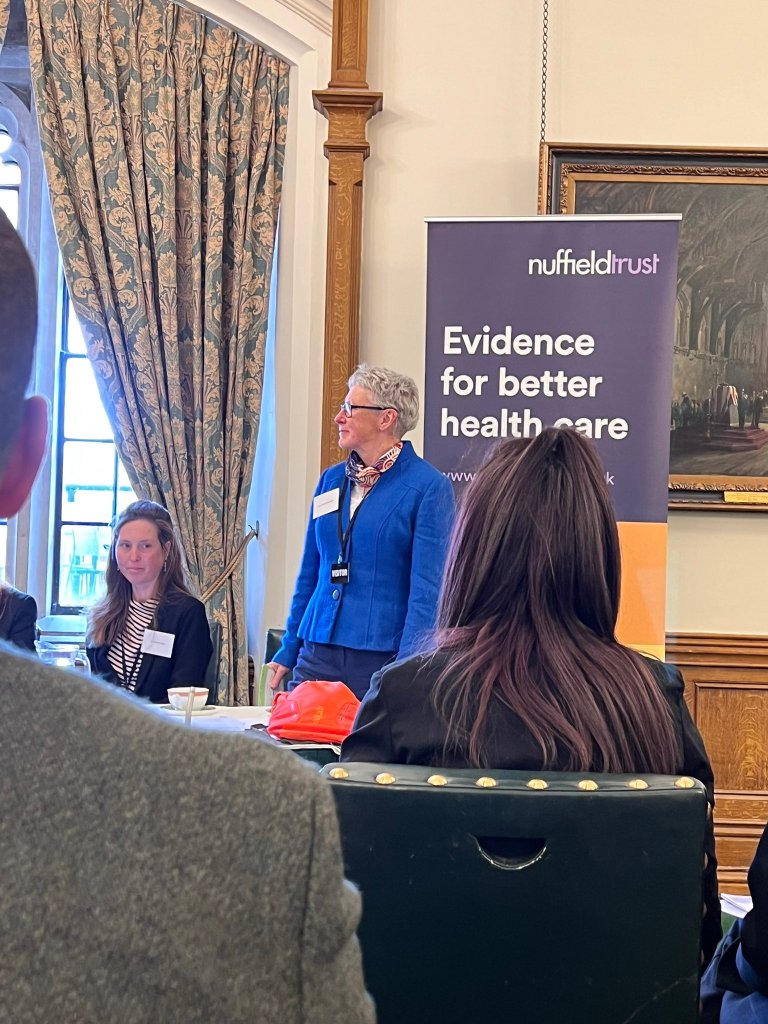
Professor Trish Greenhalgh describing some of the personas affected by remote consulting

During the presentation, hearing the personal stories of those affected by ‘Remote by Default’, as receivers and providers of services, will always bring you down to earth, irrespective of the magnitude of the setting.

Professor Trish Greenhalgh and Dr Emma Ladds sharing some of the experiences from the research

The strongest message I heard is that people need and value continuity of care to get the most from the experience, prioritised over quick ‘transactional’ access.  Secondly, that delivering and receiving care remotely (telephone, online, video, asynchronously) can be safe (see Table, p10)  but that training and developing the right culture is as fragmented as the technology used to deliver care. Thirdly, that the purchasing of technology is not just about the product, but the variability of its implementation has resulted in unequal impact (see my other blogposts). Finally, that although the NHS has plans to embed this into education, it will take a long time, and General Practice need the help now.  

So, the training needs and competency framework are super helpful, and for those supporting general practice this research is gold dust, as it should inform the basis of any training and advice. 

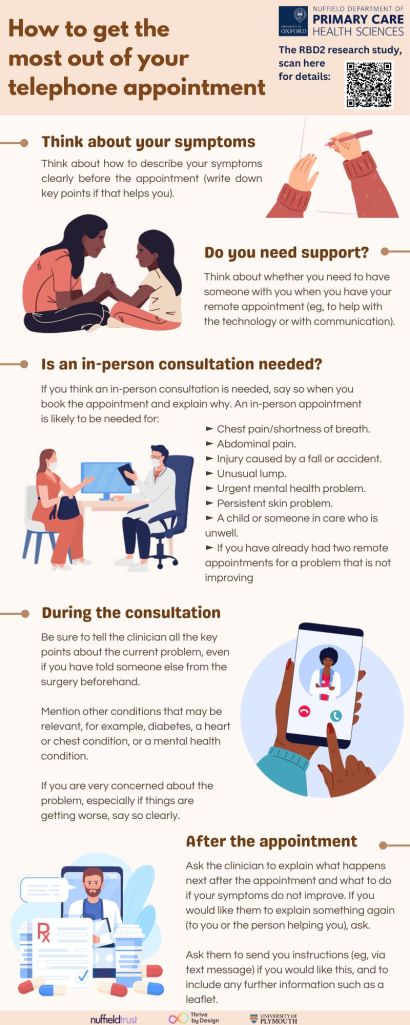
We’ve already used this patient facing communication created by the researchers and posted out a social media campaign across 700+ practices to over 30k patients to inform and encourage people to access care this way. 

How to get the most from

image containing information about symptoms, if you need support, when an in-person consultation is needed, what to do during and after the consultation

Although it was a flying visit, I met and hugged some incredible people that I’ve only ever seen on screen or interacted over socials. I sat beside someone who also hailed from the North and it transpired that I knew their father – how Cumbrian is that!

What happens next

The research team are sharing their learning on a public zoom event on 22nd May, so watch out for details if you’d like to join us.

The event from the train

Back at the Redmoor office, the team had a successful day too and now have a clear plan for our digital and transformation products and services, so watch out over the coming weeks/months for updates. 

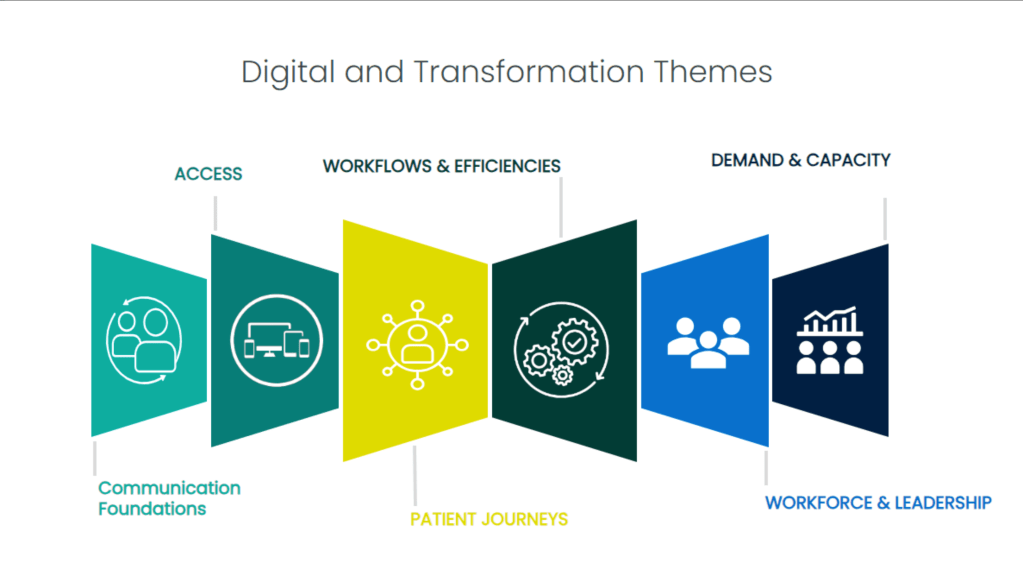
Digital and transformation themes, noting Communication foundations, Access, Patient Journeys, Workflows and Efficiencies, Workforce and Leadership, Demand and Capacity
Digital and transformation themes
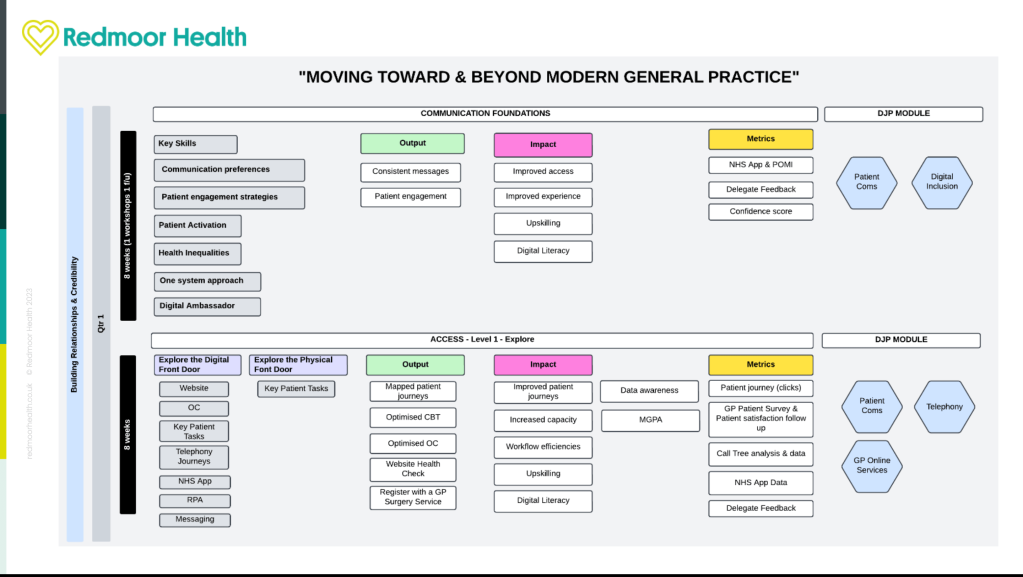
Moving toward and beyond modern general practice - an image describing all the key skills, outputs, impact, metrics involved
Moving toward and beyond modern general practice

Finances, procurement, reorganisations, research, and new models of care

We took part in our joint HSJ Awards - Best Consultancy Partnerships interview with one of our clients this week, as we come towards the end of a 3-year programme. As one of the original gang at Redmoor Health, it was nice for me to reflect on the successes of a strong relationship, developed to deliver a long, multi project programme aimed at increasing digital access, improving patient communications, upskilling the workforce and supporting the Digital First team to deliver their aims.   I took a moment to consider this strategic partnership against the current climate of change and chaos in Primary care and thought I’d share some musings with you. BTW, its 8mins long so get yourself a brew and ponder with me.

Finances

Its that’s time of year, when in the last quarter, there is traditionally a frenzy of activity in General Practice. Teams are chasing patients and are working hard to recoup any finances earned throughout the year to maximize payments, following delivery through QOF and the Primary Care Network contract.  With only 7 weeks to go to the new financial year, uncertainty over pay and contract negotiations is making next year’s planning harder than usual.

Throughout 2023, there was a raft of new guidance, contract and service changes that managers needed to understand.  ICBs and Regions are now comparing progress against targets and seeking assurance or evidence of improvements against new criteria before they can release payments. Some are excelling at this, others finding it hard work. That’s on top of the usual round of heck, we have to spend this money before year end last minute decisions. Previously, we’d agree with our clients to receive and hold this year’s £s, then together work up a more detailed scope for delivery into the new financial year, when their priorities are a bit clearer and they can engage properly when primary care have more time.  With the reorganisation and requirement for a 30% reduction in costs across NHS Regions and ICBs, some people are facing redundancy or moves to other jobs, consequentially, loss of local organisational knowledge and decision-making inertia is becoming clear.  Also, the combining of primary care transformation and digital budgets is affecting financial flows and prioritisation of projects.  Clawbacks on unspent budgets are being mentioned in dark corridors and on socials, which is a sad reflection both on the plans and especially when primary care need the funding right now. 

Primary care contracts

One element of the PCN contract is the capacity access and improvement payment.  Unsurprisingly (clue is in the name) this is largely about improving patients experience and access, with payments linked to improved appointment recording.   As part of our Digital Managed Service, our team have been supporting PCNs to deliver this guidance, contract changes and ‘new models of care’, so my super colleague Dillon Sykes and I thought this might be a topic for discussion at our session at Best Practice, London on 28 & 29th February.   We’ll explore some of the headlines, overlaps and gaps, ponder a little around the various checklists and criteria to be met, then hopefully share some practical steps to help.

We are seeing lots of angst that the General Practice Appointment Data (GPAD) dashboard still seems to contain inaccuracies and a lack of clarity over what is counted, and how to make historic changes etc that will impact on payments.  New to the ‘additional roles’ stables are the Digital &Transformation Leads and alongside PCN Managers, both are still trying to understand appointment mapping guidance released in 2021.  Clinical system providers have released workarounds in the last couple of months as temporary fixes. Frustrations are appearing between General Practice and PCNs as the data is held and configured at practice level, but the impact is felt in the PCN.

It’s great to hear that some ICBs are supporting well, providing datasets throughout the year to keep an eye on progress.  We are sincerely hoping that ICBs take a pragmatic approach to releasing the final 30% payment, whilst the data is still ‘more than a bit flaky’ (technical term).

To help with GPAD, our team ran webinars and held 1-1 sessions with practices or new D&T Leads to go through their configuration and data. We produced a simple GPAD tool to help navigate the guidance and we’ve also asked passed on quite a few questions to people in NHSD/E to gain clarity.

Procurement of new digital solutions

This last year’s quarter is also a little bit different though, for many suppliers of services and products to the NHS. It’s not unusual for slippage in the NHS, but some of the key elements of the Delivery plan for recovering access to primary care that slipped or were reprioritised, will have knock-on consequences for many colleagues in the product and supplier landscape.  This will also affect practice teams and inevitably, on patient services.

Many commissioners were getting ready to re-procure their digital tools to support Modern General Practice Model, but the Digital Pathways Framework on the Digital Care Solutions buying catalogue due in Aug 23, then moved to Dec 23, still isn’t released for commissioners to purchase from. 

I’m fortunate to occasionally take part in user research and know the NHS team are working hard to make the experience of the buying catalogue better, but this delay has impacted on ICBs, PCNs, Practices, Product suppliers and support organisations like Redmoor.  Part of my job is to seek out new partnerships and products that will help to improve General Practice, and I love chatting with new suppliers to find out how their solution will help.  There are a few with products that will knock your socks off but are not available to purchase from the existing procurement frameworks. Some PCNs are bravely buying directly, as they can already see the value, but many are nervous or don’t have the finances to buy direct, especially if their local ICB is expected to and will fund (or even part fund), once the new buying catalogue is available.

As a consequence of the delay, it looks like many commissioners have little choice but to extend existing digital solution contracts for another year. This can leave practices with products that they didn’t choose or don’t use and patients don’t like to use, so stick with the conventional methods of access (Telephone).  So, in ‘kicking the can down the road’, existing suppliers breathe a sigh of relief and new products don’t get into the market, leaving us all feeling just a little bit frustrated at what might have been for another year.  Do we invest time and energy trying to optimise solutions that we know don’t fit the needs of our staff and patients?

Our new procurement support service logo

Suppliers tell me they have lots of interest from ICBs and PCNs but can’t recruit to scale up delivery until they know the contracts have landed.  There will be a rush at the end, and we know deployment and implementation will suffer. These tools are essential to deliver high quality 21st century primary care. Having been through this process with one of our strategic clients last year, we have experience and are well positioned to support suppliers and ICBs with market and practice engagement, early implementation, adoption and spread. So, if you want to plan early, drop us a line and we’ll walk you through how we can help.

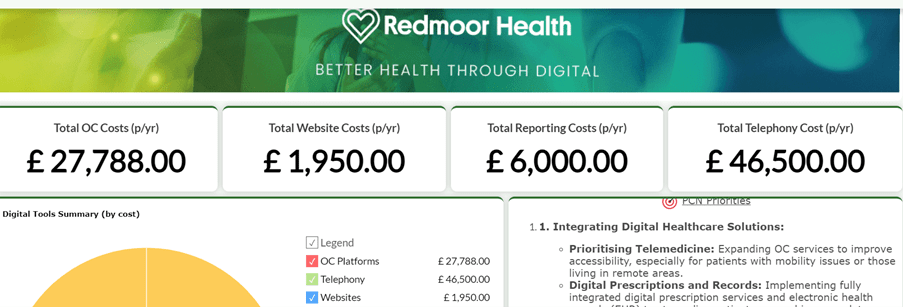
An example PCN dashboard showing the costs and variation of products in use.

Research

In addition to user research for products, I also contribute to research for new services in development and I’m delighted that NHS are developing a guide to improving messaging. This has become such a complex area, since the inclusion of messaging as a requirement for all online consulting tools. The NHS is paying twice for quite a few functionalities and the holy grail for practices was always to have digital solutions in just one platform. There are a couple of suppliers doing this extremely well, and with the increasing desire to reduce SMS costs, data messaging is the way forward for many. One super research project that I’ve had a small involvement as part of their Expert Advisory Group is the Remote by Default project from the teams at University of Oxford and Nuffield Department of Primary Care Health Sciences. They’ve released some great resources following a 2 year study into remote care. We’ll be helping to push these out to patients in over 700 practices via our Social Media managed service, and will build the training competencies into our programmes, so we are confident that our work is grounded in rich research. What is interesting, is the different approaches across the Nations. Scotland have procured one video consulting platform for the whole nation to use, with a contract to 2026. This means they have one set of patient facing resources and one training platform for all practices and users. Very different to our market place approach in England and probably a lot less confusing.

Now – lets’ talk telephones

As another example of what I’ve just described in the procurement section, lets have a look at the requirement for Advanced Cloud Based Telephony.  Seen by some as the panacea to ‘the 8am rush’ and made a requirement in the GP Contract by end of 2025.  The Better Purchasing Framework was issued, some ICBs took advice and started to plan the ‘at scale approach’, working out whole system requirements, engaging with practices and PCNs to gain advantages of greater purchasing power, optimise local infrastructure and achieve some consistency of service offer – great stuff!   Then a letter appeared late Nov, expecting all practices to sign up by 15th Dec 2023 or they would miss out on the funding opportunity.  Thankfully, someone realised the well-earned Christmas and New Year holiday was looming and the deadline to select a supplier was moved to 15 January 2024, with a signed contract by 2 February 2024 and go-live by 25 March 2024, with all features in place by April 2024 at the latest.  Just another added pressure in the last quarter of the year.

Now there is anxiety over where the costs will land, and we had a flurry of requests to help people make a choice urgently, so they didn’t lose out on funding.  We had others that had already moved to cloud telephony before the contract requirement was released, but had chosen suppliers not on the framework, so maybe didn’t have all the features mandated in the new contract.  Some practices had been earlier adopters, made the investment then found that there was support to buy out of existing analogue contracts.  Or course, anyone that has ever implemented new technology knows you can’t do it in a rush without good planning. Then after deployment comes the real fun – how to make it work for you.  We saw this happen during the pandemic with the necessary but rushed roll out of online consultations.

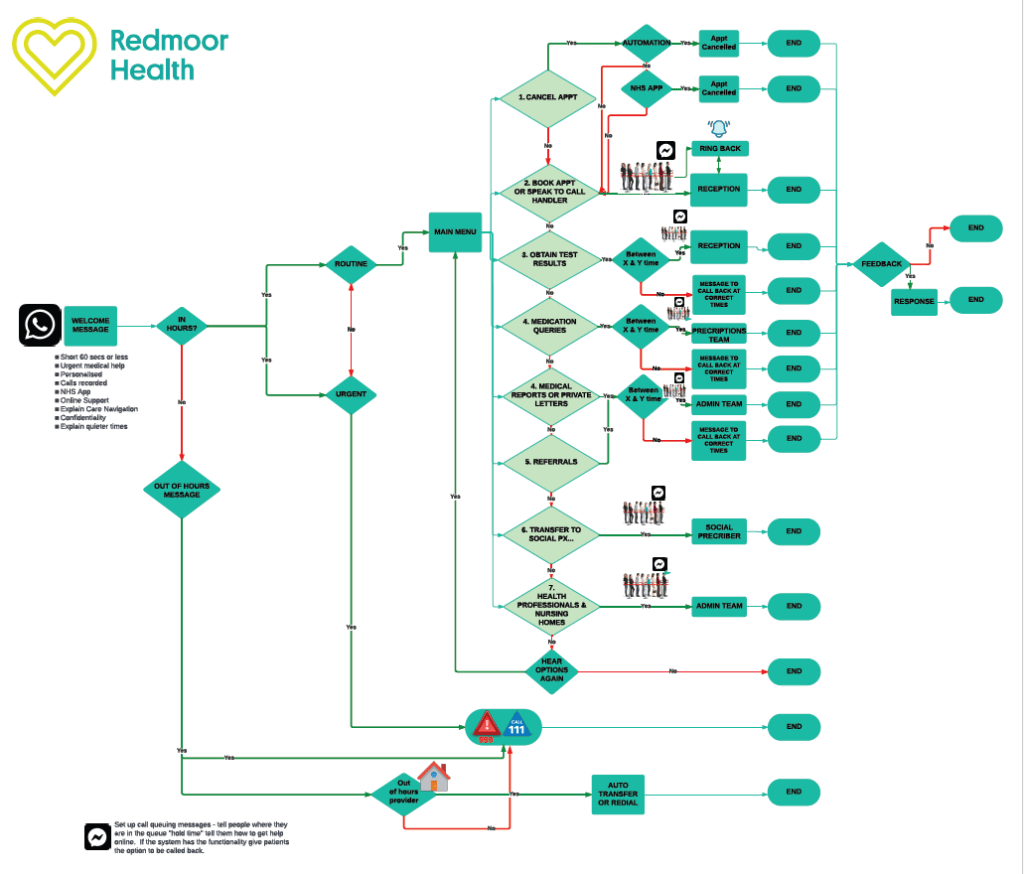
Our team have been delivering workshops, listening to and improving auto attendant messages, optimising call flows, aligning with online service options, all to ensure fair access to services and an improved experience for patients. And then of course we threw in a Digital Journey Planner module around planning and optimising Telephony.

This is just a flavour of our support on offer to help the NHS at all levels in primary care to navigate the noise, help with the priorities, support the providers to deliver, optimising the solutions available.  We hope you can come and see us at Best Practice at the end of the month, we’ll be at Stand D45 talking all things primary care improvement.

Book here: https://ow.ly/Tf6050Qz6sE

If you cant make it, drop me a line or get in touch hello@redmoorhealth.co.uk because we love to help and know a bit about your world right now.

Highly usable websites, inclusive and accessible content – all coming to a GP website near you

Well, this is very welcome…  

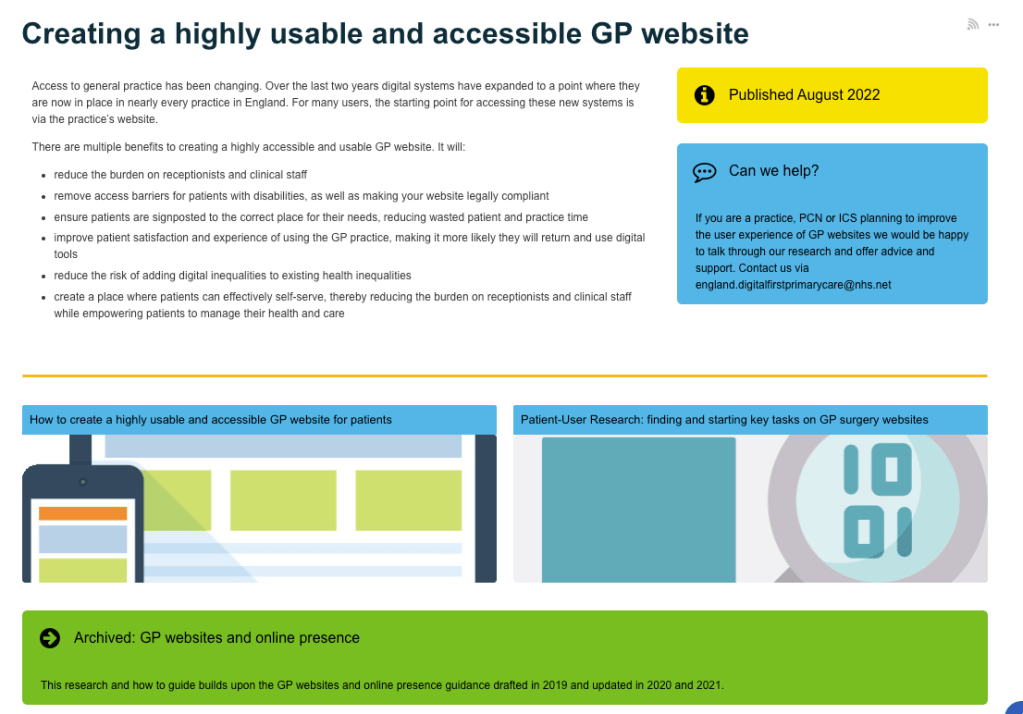
Future NHS page with the ‘creating a highly usable and accessible GP Website for patients’ guide, and ‘Patient-user research to support’

In the last few weeks there are some super updates to the guidance from NHS Digital and NHS England that will help GP practices to create inclusive content and usable websites. It should also make lives easier for people who need to use the ‘Digital front door’, aka GP practice websites. 

I’m talking about the updates to the NHS Digital service manual,  Content style guide and the ‘Creating a highly usable and accessible GP Website’ from NHS England’s user research team, Dominic Vallely and Emmy Graham. We’ll be exploring the content style guide and the ways in which practices communicate with patients in a joint event with Nexer Digital on the 12th October 22 (have a peek on Twitter at #LettersHack).

If you’ve followed my other GP website blogs ….

You’ll realise that I have a bit of thing for GP websites.  In my day job, I sit at the intersection between policy makers, NHS commissioners, specialists in inclusive and accessible research and service design, product suppliers and the people in practices who try and make sense of it all, to provide services to us as patients in the NHS.  It’s a nice place to sit.  I don’t need to be a specialist, I don’t need to have the technical know-how, and although I do know a fair bit about General Practice, service improvement and delivery, we all have experiences as patients that we can lean on and learn from. This guidance brings much of that knowledge into one place. 

This is why the guides are so helpful….   

GP Practices have a myriad of contract requirements to meet, in fact there are 10 pages of items listed in the ‘highly usable website guide’.  Many of them are iterations of earlier contract requirements, it’s no wonder practice teams are confused – I’m confused by much of it too.  The GP website supplier market is large, as is the online consultation market and each supplier clearly wants to do the best for their clients – the practices.  But occasionally and possibly due to the market competition, these suppliers sometimes focus a bit too much on their own branding and product and not quite enough on the usability of their product, either from a General Practice team perspective or the intended end user, i.e. the patient.  They may forget that their product needs to be connected to another NHS service and so needs to conform to the standards and style of the NHS brand, which is trusted and researched to reach as many people as possible.  Often, the user is confused when they access information online and get diverted off to a supplier’s platform, or suddenly the page no longer looks like their GP practice or even an NHS service. 

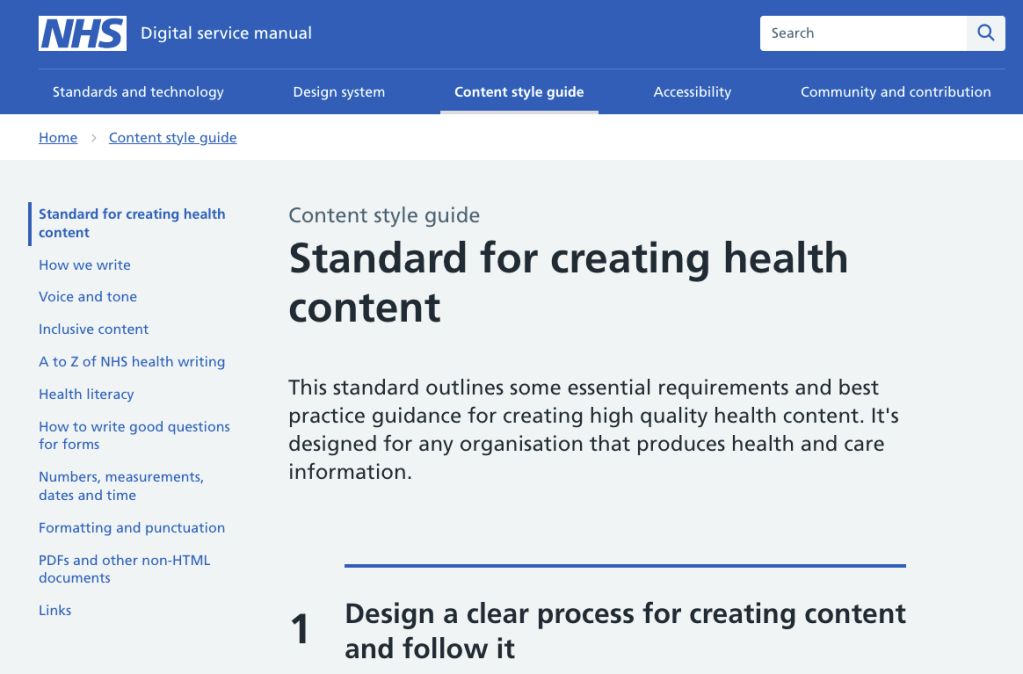
Home page from NHS Digital service manual showing the Standard for creating health content

Colours matter, language and content matters, the user’s journey matters, the technical layout matters.  For the practice teams who have a million other things to do, simple ‘how to’ instructions and examples help enormously and these guides offer sample layouts with ‘things to include’ and just as importantly, things ‘not to include and say’. 

Hilary Stephenson, Managing Director at Nexer Digital says,

It’s great to see the convergence of user centred design standards and technical platforms across the NHS and their vendor network. Sadly, in our work we have seen real issues with the core usability and accessibility of websites, consultation platforms and apps used for digital engagement. This feels like such a missed opportunity at a time where digital inclusion is vital for patients, their families and those delivering services under immense pressure. Anything that provides practical guidance, which is evidenced by user research and makes things more inclusive, from content design through to platform configuration, will improve the experience for patients, clinicians and administrative teams.’

Hilary Stephenson, Managing Director at Nexer Digital

Now the work starts….

There are over 6500 GP practices in England, just over 900 in Scotland, almost 400 in Wales and over 300 in Northern Ireland, each serving their average registered population of 9000 people.  That’s a lot of people to reach to reduce the variation of experience for users and for practice teams who provide information.  We have incorporated this guidance along with simple advice, hints and tips into an easy-to-use system called the Digital journey planner (DJP).  The first module; Patient Communications deals with Websites, Social Media and Messaging, The second module; GP Online Services covers everything that practice teams need to know to provide a good online service and make that easy for patients to use. If you are getting ready for patients having full online access to their medical records later this year, it’s a must. Our next module, due for release at end of Sept will be Digital Inclusion.

Map showing location of practices in England using the Digital Journey Planner. Blue dots have Foundation access, green dots are practices with Enhanced support from Redmoor Health to embed digital service delivery. Aug 2022.

So far 10% of practices are using this system in England currently and we aim for 25% before the end of the year.  At Redmoor Health we work with practice teams to help improve digital knowledge, skills, confidence and competence and offer support in terms of training, coaching, advice and share best practice resources that save practices time when searching for help.  These guides are essential learning tools to embed in the DJP, so they are easy to find and stand alongside practical hints and tips when to use.  Some areas have already commissioned Redmoor Health to carry out reviews across all their practice websites, just to get a feel for the scale of the problem and ideas how to help. Others have offered incentive schemes for practices to have the time and space to make the changes, so we anticipate this as a big opportunity to improve, standardise and simplify access to information.   

The suppliers…. 

Good suppliers have been using these standards for some time and have already created NHS style guided website templates, that meet the accessibility and usability needs of users and practice teams.  Others recognise that they need to encourage practices to move away from old legacy systems, personalised styles and ‘whizzy websites’ to be more consistent, and to simplify the user journey.  I’m quite sure many more will now take on these recommendations following the detailed patient user research that informed the guide. I spoke to a few to get their views of the research and guidance.

Iatro Practice 365 have already produced a simple version and template for practice teams to know what to add to their website. Thomas Porteus said,

‘We’ve been behind the NHS Service Design Toolkit since we started, it’s been a pleasure to work with NHS teams openly and to be able to contribute our own code back to the project for the good of all NHS organisations. The guidance is a really great point of reference for practices wondering where to start, and what to avoid’

Thomas Porteus, CEO and Founder of Iatro

Tim Green, co-founder of GPsurgery.net, commented:

As advocates for patient-friendly, accessible websites since we began working with GP surgeries in 2004, we warmly welcome this new evidence-based guidance from the NHS Digital First Primary Care team. Clearly focused on simplifying the patient journey, the guidance offers practical advice and tips for practices and commissioners aiming to improve patient experience, reduce digital inequalities and remove barriers to access for patients with disabilities.“

Tim Green, co-founder of GPsurgery.net

Dillon Sykes, NHS Partnerships Manager and Joe McGrath, Product Manager for Livi have been developing the full patient journey via their website platform to connect to the NHSApp.

‘At Livi we welcome this new guidance from NHS England. Accessibility is not about sticking assistive technology onto the website. It is about building the website from the ground up to work with third-party assistive technology (e.g. screen readers). It is also about ensuring the website content is written in a way that is clear and understandable by the majority of users.  By using the NHS Digital Service design system, Livi websites are NHS branded, optimising functionality and providing confidence for patients to engage with online GP services (as well as other locally commissioned services and third-party tools). We believe practices should have generic accessible content and definitions of local service providers to help patients manage their own care. This approach has allowed us to build a practice website platform that gives practices back more time to spend on patient care by:

  • nudging more patients to digital services and appropriate alternative NHS services,
  • reducing the time needed to manage and maintain the website
Dillon Sykes, NHS Partnerships Manager

To the commissioners – let’s do this together….

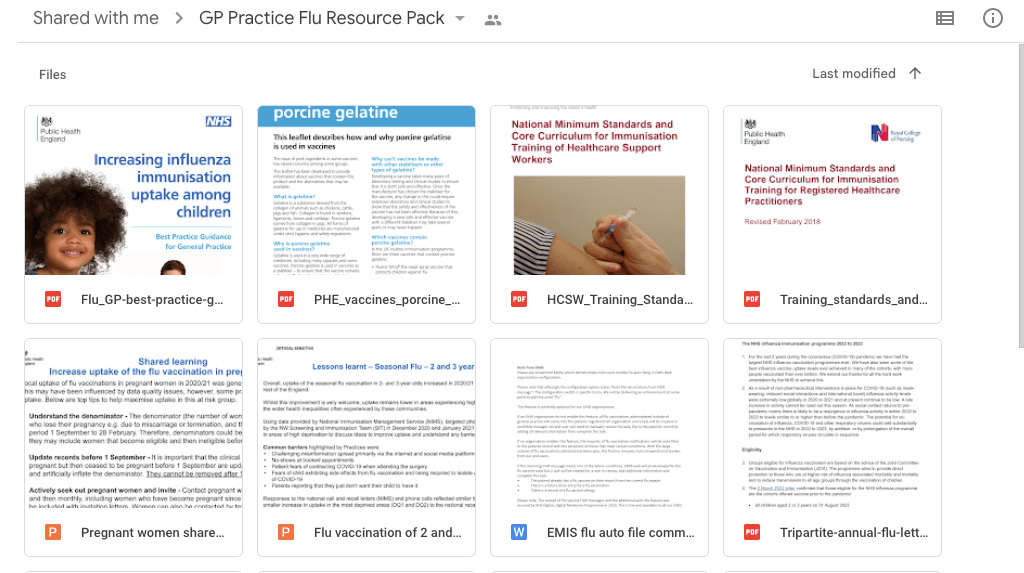
Most useful in the website guide is valuable information for NHS commissioning teams to help procure GP websites ‘at scale’ and to know what to ask of suppliers in terms of user testing.  Perhaps now is the time to rethink the stance that ‘it’s a GMS requirement to have an online presence’. This must be the way forward to support local population communications and connecting the services at a local level for patients. It will support primary care network development and reduce the burden on individual practices to know and learn about website technicalities, so they can just focus on the message and how it is presented or accessed.    As more services are delivered together, why would we expect each separate practice to upload its own content and service description?  Surely this is done once by the local service provider?  Let’s take a current example.  Practices will all be delivering Flu and Covid boosters soon.  They need one single page for who’s eligible, then the ability to edit and add what’s happening locally, so that people know how to book and where to go.    Currently each website supplier may duplicate this, and some are good enough to offer a ‘Flu’ content page.  NHS England have issued the criteria in a Specification.  Public Health (UK Health Security Agency) have some promotional material, and poor practice managers will be trying to make sense of it all to tell their patients what is happening, whilst awaiting the final dates from vaccine suppliers and working out which members of the team can deliver.  One forward thinking area has thankfully collated all of this information together for its member practices and wait for it…… shared it as a google drive document to 200+ practices via email!!! That’s my Friday job folks – to upload and create this years Flu page.

google drive document containing all of the information required for 2022/23 Flu campaign

Hopefully, you can see where I’m going with this. Do we really need 6500 individual digital front doors?   I think not, but always open to be persuaded if you think the status quo is better.

GP websites – just what is their primary purpose?

A colleague recently shared a research project they are working on; ‘What does a good Primary Care Digital offer look like?’ We chatted a bit about GP websites and ways that we try to communicate with patients and I delivered one of my usual unstructured ramblings, so thought I’d share some of this with you and ask for views please.

Introduction to the project

When I heard about this research, my first response was to ask if I could join the project too.   Primarily I wanted to be sure that someone who worked in general practice could offer an operational perspective. I also wanted to avoid ‘a solution’ that would make more work for already very stretched, practice staff. Having been a PM for 8 years and been working with Patient Groups for more than 15 years, I have an interest in using digital solutions to communicate widely and have a few connections in the world of digital and user experience design; I thought it would be a nice opportunity to work together on this.  Like many practices, I knew that our practice website was due a refresh; we’d signed up with our Website provider in 2012 and although fiddled with it a bit, not really changed its look since.  There have been software updates, but as we had been on the cusp of joining a new organisation for some time, I kept thinking we would wait then create a combined practice site with a more corporate look and better functionality. So, here’s the first question, as a patient or carer, how do you receive information from your GP surgery? Have a look at your GP’s practice website and see when it was last updated and ask yourself, does it contain the information I need?  What other stuff is on there that you didn’t know? If you have a health related question, where do you search for information? Let me know and we can try and ensure we signpost to this.

Why are websites never up to date?

The word Everything on a To-Do list on a dry erase board to remind you of your tasks, priorities, goals and objectives

Reasons for not updating websites frequently are many, but usually due to time pressures. I also had a fear that if we changed the layout, we’d be inundated with concerns from patients asking where things had moved to – a bit like moving items in the aisles in the supermarket.  Although we add information fairly regularly, the process is clunky; the site’s formatting and design aren’t that user friendly and from a practice perspective, it’s just another job to do.

Value for money or too expensive?

Funding a new website is also a thorny issue. Bigger (or better funded) practices may invest in a bespoke product, smaller practices may see this as an added luxury. A good website should deliver value for money, especially if provides patients with information about the right service for their needs or links to local, relevant advice on ill health and disease prevention and selfcare. A priority for the health service right now is the need for people to use services responsibly. The NHS is so complex, how do people know where to go; use 111, local walk-in centre, general practice, specialist community service, A&E – the list goes on. General Practice is viewed as the front door to the NHS so the assumption is that its their job to signpost patients. But is it really the GPs job to describe all of the various options? Good website content and design should help with quick access to information and good signposting to services without having to wait in a telephone queue. Yet many practices buy the basic off the shelf, template based site for less than £500 per year and give little direction in terms of where to go in the NHS. Perhaps all of those other services should provide information about when to visit the GP?

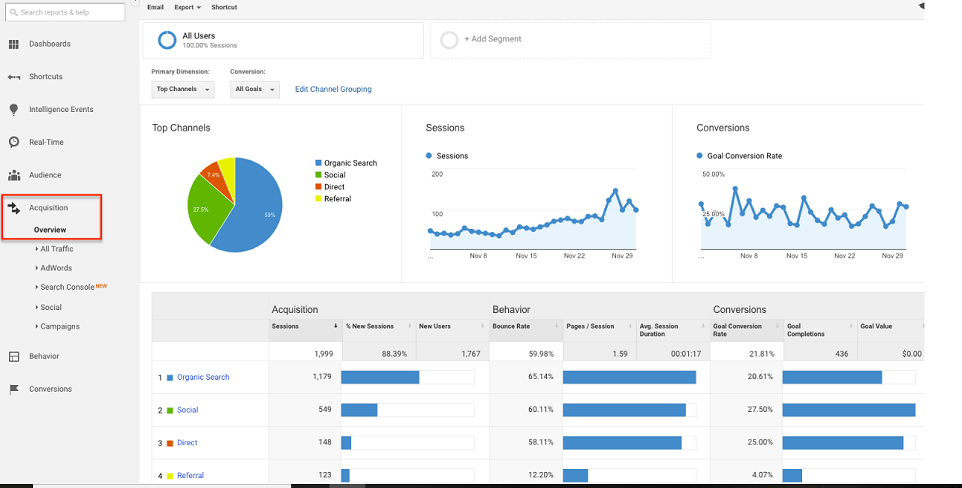
From a site ‘visit’ perspective, we can no longer access visitor and page view statistics, so we don’t really know how many people visit or if the information is of value.  The world of website analytics is unknown to many practice managers. 

So, where do Practices look for a website provider….

There are a number of proprietary providers that most practices use because they are recommended on Forums (Practice Index, Practice Manager facebook forums etc) or linked to other existing service provision (MysurgeryWebsite, Wiggly Amps, Egton). The question ‘who do you use as your website provider’ has been posted numerous times in the last 12m.

These sites are usually hosted and come with an element of local tailoring with set templates for you to choose from.  Many practices just go with the basic product as delivered from the supplier on day one, others clearly spend time thinking about the look and content. Historically, they tended to be desktop based versions, but increasingly they are adapting to be suitable for use with mobile options as more patients use a range of devices to access healthcare information. I’m told by our provider, that we have a legacy system and waiting to see the demo of the new Digital alternative.

A GP website is a repository of information with links to other useful sites, but often they contain lots of repetition and page changes, with the user losing their way from an initial enquiry. Patients can spends time surfing around for key information, yet still many practices don’t even have the basics of an email address or a number to text for general contact enquiries.

Functionality –   Front facing and back office?

There are website providers that not only host information but also gather patient information too, through use of online forms.  They attempt to ‘stream’ patients enquiries through to specific teams i.e. admin, medication enquires or clinical care (e.g. asthma questions).  They are sometimes partnered with other recognised ‘Online consultation’ forms.  These sites are helping practices to carry out vital data capture and also provide a form of triage, but how are practices assured of the risk i.e. data protection, clinical good practice etc.  Some practices are cautious of opening up other channels to receive additional work streams, especially as not all are integrated with the practice Clinical Health Record system, so clinical coding is missing. Maybe these functions should be viewed not as ‘additional’ but alternative ways of dealing with enquiries; better than a wasted GP appointment for a simple non-clinical enquiry, no?

Many website providers also offer a ‘back office’ or intranet function for practices to create and store information such as contact lists, room schedules, staff rotas, significant events, fridge temperatures, procedures and policies etc. These are used by the whole team and contribute to appraisal preparation and evidence of compliance for regulators. Increasingly these functions are being replaced by better compliance and collaboration tools such as GPTeamnet, Fourteen Fish etc

Do practices have the right design and communication skills?

I don’t mind admitting, I’ve got ‘font and layout’ issues and the limited text style irritates me, so I don’t enjoy this job when there are so many other things to do, but I never seemed to make the time to learn how to use it properly and I know that many Practice managers are the same.  I also don’t have the design skills to make the layout effective or to incorporate graphics or images that replace the written word.

Although template websites have a range of options to choose from, the design and formatting functionality can be somewhat limited and clunky.  It’s fairly easy to spot a bespoke high quality design from an ‘off the shelf’ template.  Most practices wouldn’t know where to start in terms of placing the most frequently used pages/items at the front, or create eye-catching designs that engage users or communicate effectively.

Web designer

NHS Digital have kindly provided guidance for us to follow – I shared it recently with other Practices and doubt anyone has actually read it or made changes as a result – I know I haven’t had time.

This is part of NHS Digital, creating standards intended to ensure accessibility and inclusion and good user experience.  Many websites still don’t address the increasing need for good accessible design and practices buy with the hope that their site meets the legal requirements for accessibility and inclusion. This guide is great for designers, but well above the skill and knowledge level in most practices and I wouldn’t know where to start checking our current provider against these standards. What would be helpful is that anyone who provides a website service can demonstrate they meet this standard, so that practices can be assured before they purchase.

NHS Generic information repeated?

The new GMS GP contract requires practices to have an up to date and informative online presence by 2020 (page 35). If we are to adopt a ‘Digital first’ approach, for those users who choose this, then a website’s original function is being overtaken by many other products. There are apps here, there and everywhere and more practices are using social media to share information quickly and widely, as well as traditional newsletters and posters in the surgeries.  There are many more online services to offer or ways for patients to access these services via alternatives to web browsers.

But don’t forget that NHS.UK (not called NHS Choices any more) has already created a unique site for every practice and some of the National dataset for performance links to this site i.e. star ratings and comments about service provision.   Having a practice website has been a minimum General Medical Services contract requirement for some time, but I doubt many practices update their NHS.uk one as well as their own site.  Most will just link to their own website. So each practice probably has links to GP survey comments, star ratings, who’s who, when we are open etc held in multiple places and this is another reason for out of date information. The connection to NHS.uk is provided from the clinical system provider (i.e. what online services are connected) and feeds into national contract management tools such as the Primary Care Web tool.  This is also the place where CQC look for feedback and comments.

Primary care working as networks

As more practices federate and work as networks to deliver shared services, access and common information should be provided via one page and not duplicated on separate sites.  Although some practices want to retain their own ‘front door’ to maintain familiarity for patients, most would happily hand over the ‘back office’ role of updating websites and linking to other NHS services and content. Will this be high on the priority list of any newly formed network?

Social Media, Reviews and Comments

Now things start to get interesting as people ‘check in’ and review their experience using tools like Facebook, Google review and I Want Great Care .  These platforms encourage patients to ‘like’ or ‘comment’ following attendance – practices can choose to ‘own’ these sites and respond, or ignore but are unable to remove comments so they may sit there, open for others to view unanswered.  Some practices hate this and are really fearful of data breaches as well as opening up other channels of communication. They may have a negative experience of social media and don’t want additional work of training staff to work safely and professionally in an area that crosses over with leisure and out of work activity.

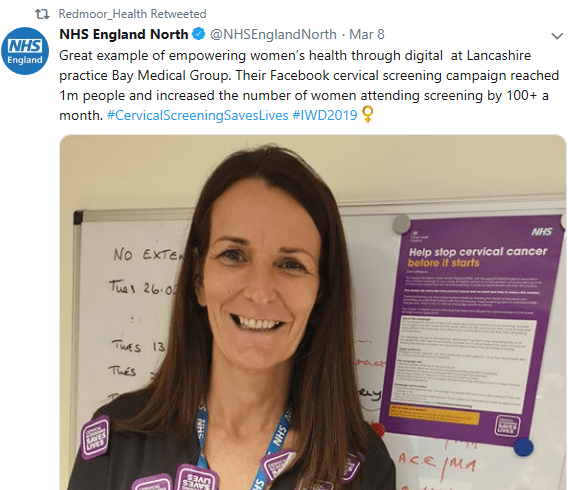
However, if used wisely, social media offers highly effective alternative methods of communication for mobile users.  This recent post by one practice reached over 1m people to advise them about cervical screening services. This encourages interaction rather than one way push of information and has the ability to reach quickly and widely with little effort. 

More and more practices use social media and message solutions to communicate with individuals, groups and whole sections of the practice population as well as providing opportunity for ‘communities of interest’ and large scale communications at federated levels of General Practice. This has to be part of any new communication system.

Access to online services

As more services are delivered online, then application developers are providing better alternatives to the GP practice website for transactional services like booking, cancelling appointments, ordering medicines etc. There is a market approach to the development of these online services and practices are struggling to keep up and train teams to offer knowledge and advice on the options to their patients.   Each app seems to deliver different functions which means that app of choice will depend very much on the need of the individual patient.
Depending on the provider, some websites link to a practices clinical system for online services but can only offer one online service and not multiple options. Although patients can choose from a number of different platforms to access online services currently, website providers haven’t enabled this choice. This limits practices and patients if people want to offer and use a variety of online services. The only way to do this is to signpost using weblinks rather than widgets to apps to advertise the options to patients.  All four current  providers; Evergreen Life, Patient Access, Dimec and Iplato all have apps to access booking, cancellation, messaging, medication ordering, medical records viewers etc but not all have browsers. Conversely, some of the online consultation systems only use browsers. The NHS app is due to roll out imminently, but as yet, we don’t know how this links to a practice website or browser option.

Conclusion

As you can see, its detailed and complex and really does need a review.
The work that UCLAN are doing with the NHS Primary Care Digital Transformation team will help inform what a good Primary Care Digital offer looks like. We need this to help practices buy and recommend the best products with confidence. We also need to know what content is most useful so that we help guide patients to the right service for their needs, quickly and easily.  So I’m glad this project is started, but let’s think first, what’s the purpose of a website and who is this project aimed at?  Please do add your comments and we will see if this can be added to the research.

Digital Health – missed opportunities

As some of you may know, I try to improve patient experience and our NHS working lives through use of digital solutions. I’ve recently been on the receiving end of NHS treatment so thought I’d share the some of the missed opportunities for digital ways of working to help along the way.

The Problem

Sat morning; I found a breast lump, I wasn’t over worried as I’ve had them before, but knew this one would need checked out.

Appointment system – how much is online?

I logged onto the MyGp app to book an appointment with my GP and the next available face to face appointment was in 21 days.  The next available telephone call: 15 days.  Now, this is in a practice will full complement of GPs but with a fairly new manager who perhaps hasn’t yet got to grips with online services.  I know this, because I’ve offered to go in and help.  I’ve not received a call yet but I’m sure they have plenty of other stuff going on in the practice.

So I wait and ring on the Monday morning at 8.10am and ask for the soonest available appointment with a female GP – I’m happy to see anyone of 5 female GPs.  ‘You can have one with a male GP in the extended access session this evening’.  ‘No thank you, I really would prefer a female GP’ – I work with these people so not exactly keen to show male GP colleagues then sit opposite them in future meetings. I know they see bodies all the time, but still, I preferred to see a female GP.  This happens all the time when you work in an area where you are also a patient.  In our practice over 75% of our staff are patients, but as they have been in the same practice since they were children, they’ve sort of got used to it. Also, there isn’t anywhere else within 10mile radius.

Back to the call.  The Receptionist tells me that there are no appointments available to prebook this week and asked if I had looked online.  Of course I had, I did that first, I’m an advocate of working this way,  I spend my working day telling everyone else to download apps and book online.  So I advised her when the next available online appointments were and thought, perhaps they might want to look at that.  I probably sounded grumpy – I apologise, but shouldn’t all reception staff be aware of when the next available online appointments are?  How many reception staff actually know this information and if its fairly poor access, what can and do they do about this?  Are they empowered to make more appointments available online or is the process for doing this fraught with lack of clinical system knowledge, unclear decision making, or just no appreciation of how helpful this is for patients and may save themselves some work?  How do people like me, get over the threshold to show them these benefits?

I then explain to the receptionist (without being asked to) that I have a lump, that I think it will need seen and possibly referred and ask ‘what do I need to say or do to get an appointment this week, so that I am seen before Christmas please?’  ‘I’ll put you on the Emergency Drs list for a call this morning’. It’s not an emergency but if that’s the recommendation, I’ll go with that.

8.55am, the GP rings me back, I’m driving but I pull over and explain the problem.  I’m asked how soon can I come in, I say ‘I’m passing in the next 5 mins or I am free later this afternoon, or on 2 more days this week’.  The GP says ‘come in now’. Brilliant.  Do all patients get this offer, or is it because its a fellow female colleague, or that they are Duty Dr that morning and has the surgery blocked out for these sort of problems?  How many patients would know what to say to the Receptionist to get to this stage and how many would accept the first response of the wait?

The referral – is it really an e-referral system?

Skip a bit – on examination, ‘it’ needs a referral, GP says, ‘where would you like to be seen?’  I know this bit, so I reply  ‘soonest one-stop-shop please’.  ‘Oh, there doesn’t seem to be any sessions showing on the e-referral system so I cant book for you now, I’ll get the secretaries to fax it as a 2 week referral this morning and give you a call’ (yes, there it is for those of you who cant wait to Axe the Fax).

Do the hospitals not routinely show certain clinics on the e-referral system?  What incentives and penalties are there in the contracts between CCGs and Acute trusts to help with this?  We are being encouraged to use e-referral from General practice but what is happening in the hospitals?  As for Axe the Fax toolkit- that’s possibly the subject of a future blog on its own.

‘Great’ I say, ‘if the secretaries give me the booking reference, I’ll do it on my app’ (MyGP app allows access to e-referral system now).  ‘Erm, are you sure?  I’ll get the secretaries to fax it and call you just in case’.  This GP currently has interim Chief Clinical Information Officer responsibilities for our CCG.  I get it that they are trying to make sure nothing gets missed, so appreciate this, along with their comfort with existing ways of working.  At the same time why is there no confidence in this product or to try a different approach?  Here was a missed opportunity to see how it worked in reality, then do something about it if it didn’t work smoothly.  I’m always happy to be a guinea pig for the system, especially if it helps to improve or give confidence. Maybe it wasn’t the time or the place to suggest this on a busy Monday morning, so I didn’t offer and left expressing my appreciation for fitting me in so quickly.

Good old fashioned paper confirmation….

I didn’t receive any phone calls all week, but Thu morning, a letter arrived from Surgery (handwritten envelope, quaint but really? not even in an envelope with a window so you can see my name and address).  How many practices still handwrite envelopes?  I wonder what this costs in stationary, postage, staff time.  They have my email address and consent to contact me by text.  I resolve again to look at this in our practice to increase use of email/text/records access for confirmation purposes.  I have access to my medical records so technically I would be able to see the referral information – of course only if the GP coded it correctly (I still haven’t got free text) and the letter was created and saved in a format that was viewable in the app.   Another missed opportunity to test the system and gain confidence or feedback problems to the system.

The handwritten envelope contains my e-referral number and passwords for booking and confirmation of my appointment at 8.30am the following morning (Fri).  Wow, now that’s quick, so I rearrange my stuff for the following day. 

Now we are onto the Apps…

I have a play with the app anyway and this was theereferral screen.
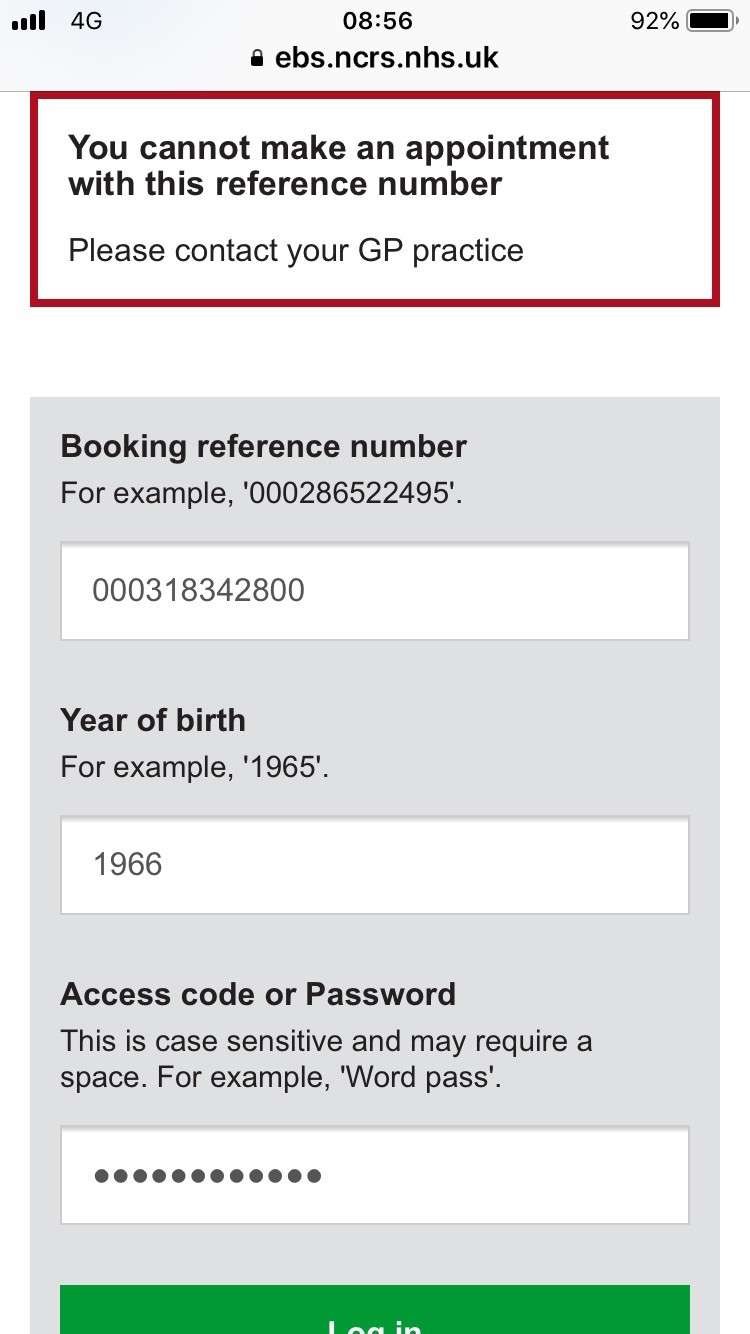
Is this an app problem or a practice configuration problem – how do I know who to ask?  Will the NHS app solve all of this once the on boarding with my NHS credentials has been completed?


The appointment…(or not)

Fri morning, up early and after 1hr drive, I arrive at hospital at 8.20am.  I go to the wrong check-in desk – its never clear is it from hospital signage, and get sent onto the next desk.

‘Sorry, it seems that your appointment is cancelled, let me check.  It’s rebooked for 12th Dec’ (taking me into 3rd week since being seen).  I ask when it was cancelled and I’m told on Monday 26th; the same day as it was booked.  I might have been looking a bit unhappy at this point.  I explain that I only received confirmation yesterday and ask who I need to call to rearrange – I’m given the Breast Clinic Secretary’s number.  I can see the Breast Screening Clinic sign about 20m down the corridor and it does cross my mind to ask if I can go see someone there, but I don’t want to be pushy so I sit on the chairs a while then call the secretaries when they arrive at 9am.  I explain, receive lots of apologies, and a promise to get a call later that day.   This occurs around mid morning and I get another appointment in a week’s time.

The following day, Saturday, a letter arrives (from an outsourced mail system in Milton Keynes) advising me that my hospital appointment (for the previous day) is cancelled and to contact the booking centre to get a new date.  I don’t bother as I’ve already got a new date, but intend to call the day before anyway to save another wasted journey.  I do wonder though what system is in place to stop an appointment letter being sent after an appointment is cancelled? I know that booking confirmation texts can be sent immediately and that reminders are sent prior to the appointment, all giving the patients a chance to cancel or rearrange if things change.  I realise that I hadn’t received a confirmation text in the first place.  

Mid week, I try to access my medical records so that I can see the dates that I have had this problem previously.  There is a error with the system, so I email the system provider and I experience a bit of 3-way email/telephone ‘ping pong’ between EMIS, Patient Access and the Surgery.   It appears that the Patient Facing Services isn’t working correctly and my record isn’t being updated in any of the apps that I use.  The Surgery escalate this issue to EMIS but give me the medical details over the phone anyway after I explain why I need the information.

More letters and forms..

Another letter arrives to confirm my appointment (followed by a text message where I reply ATTEND to confirm that I will be there) and also containing a form to complete.  This form asks for all the same information that I know has already been sent to the Breast clinic, in the standard 2 week wait referral template from the GP Clinical system.  I know how much time Practices spend uploading these forms into the clinical system, archiving previous versions, ensuring that the forms auto populate with demographic and relevant medical information, then clinicians save it in the records for admin staff to send to the hospitals either in paper form or by fax, as well as storing in the e-referral system. Basically in triplicate.  I duly fill in the paper form by hand, it asks if I have had any problems previously, what medication I take and for me to draw on the picture on the boobs where my lump is.  The drawing actually looks like this.

boobsAll of this information is already contained in the referral form sent by my GP.

Roll on the clinic morning…

Arrived on time, checked in, sent to clinic, named ticked off on another list by a Health Care Assistant with a clipboard, ‘Have you got your form?’ she asks.  I go to hand it over but she asks me to give it in at the next stage.  I’m directed to another desk, where someone else checks me in by asking me for name, first line of address and asks me to take a seat.   I wonder, why aren’t there any self check in screens in hospital.  Also, if my confirmation letter had contained a unique bar code, this could have been scanned and avoided 2 separate check in steps thus creating time for people who prefer not to use self service or may need extra help.  Even better if it was linked to the original referral – No?
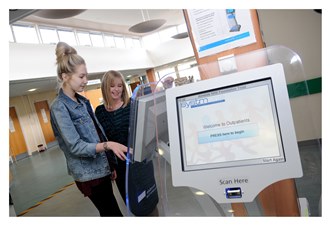
Self-check-in2-Copy

Now for the showy off bit…

Here’s where I try to be an active citizen taking responsibility for my own health.  So that I am prepared, I try to login to my medical records, of course I want to show people how this works in practice.  NHS WiFi is apparently available in  this hospital.  I log in with my gmail address, but I cant access any of the apps to view my records.  Is this is security policy and firewall protection?  So I end up disabling NHS WiFi and switch to 4g.  I can get through the app now, but these are my screenshots.

  Epic Failure!

I tweet a few of my mates to share my frustration.

I cant view any of the letters because they are scanned in a format that isn’t viewable.  Disillusioned with online stuff, I give up and watch Homes under the Hammer on the TV screen.  At least the rest of the walls are free from inappropriate posters.  The previous week (the day before my cancelled appointment),  I had attended the Radiotherapy dept with a relative and perhaps because I had this on my mind, everywhere I looked, there was a poster telling me how to ‘survive cancer’, or to join the ‘Living with cancer knitting & craft group’ etc.  It made me want to remove any posters we have in our GP Surgery as its right ‘in your face’ if you are living with cancer or have a suspected cancer.  Maybe hospitals and GP surgeries are not the place to bombard people generically with information booklets – what do you think?

My name is called and I’m collected by a Trainee Advanced Nurse Practitioner, who makes introductions and describes what will happen today.  Before the examination, I’m checked who I am again, then asked if I take any medication and what for.  I cant help myself at this point, ‘Don’t you get a letter from my GP with all of this information on?’  I cant see it anywhere in the cardboard folder that contains my hospital notes.  I naively expect it to be on the top of the folder.  A page of sticky labels is retrieved from the back of the folder and the clinician proceeds to stick one on each of the 3 separate pieces of paper.  A yellow A5 one – for Ultrasound referral, a white one which is the same as the one that I had given in with the picture of the boobs on and another one for mammography.  I wonder why two internal services attached to the Breast clinic need pieces of paper as further referrals?  I also know these labels aren’t discarded when a patient changes GP as we often receive letters with the wrong GP information stuck on an old label.  But someone had ‘ticked’ my GP name at the start so this person was confident to use the stickers.

The reply astounds me, ‘No, we don’t see that information and patients usually know what medication they are on, what if it was wrong in the GP system?’   Whoa – I’d hazard a guess that 80% or more of patients couldn’t accurately quote all of their generic medication names, quantity or dosage but possibly they could tell you how many a day, the colour or shape and maybe describe what they take medication for, i.e. my heart pills.   And why on earth would they think that the GP records might be less reliable than the patient?  This was a clinician in training, who is providing this training such that they are misinformed in such a way about the integrity of data held GP systems?

Best bit is still to come.  On the screen, there is an online form with drop down boxes to select from and the clinician enters my verbal confirmation to the responses that are written on the form.  None of the GP referral information seems to be available or visible in the hospital system – yet I know we have been sharing detailed care records in Cumbria between Primary, Community, Acute and Out of Hours systems since 2012.  I know this because I have sat and painstakingly explained to patients why its a good idea to share and not to opt out because they may have unfounded worries about their health information being shared with pharmaceutical industries, for profit, without consent.  Yet, why can’t this clinician see this information at the point of care and then confirm this with me, rather than ask again and go through the process of selecting drop down boxes?  I can feel my blood pressure rising.    The rubbish boob picture is there again on the screen and, wait for it, the clinician clicks on a symbol and drags it on the screen to overlay where the problem is.  I’m really struggling at this point to say nothing.  Is this the limit of the IT skill in some parts of the NHS where someone has recreated a paper form into a flat undynamic electronic version using MS Word?  I realise this is to create the electronic version of the paper form that I have drawn on and that no doubt mirrors the one that my GP drew on when creating the referral.  But really, is that the way we create an electronic record?

When I’m examined, a marker pen is used to place a + on the lump – is this not an opportunity to photograph (clearly with consent) and insert the image?  Could this have been done at the time of referral and included as an attachment by my GP?  Not with a smiling head shot obviously, that would connect the breasts to the owner (making it a bit dodgy), but a real pair of boobs with X marks the spot, rather than these child like drawings, where it feels like we are all playing pin the tail on the donkey.

Now its time for the Robing Ceremony

Next, I’m taken to the Breast screening area, where I get a changing room, a basket for my stuff (like at the swimming baths) and a cotton gown to put on.  I’m fairly rubbish at working out this sort of stuff.  I’m not sure which way on it goes, the kind nurse tells me how to do it and apologises for the quality of the garment, explaining that they had lovely plush dressing gowns, but that didn’t make it back from laundry.  It’s a good job I haven’t got large boobs as the gape was right in the chest area.  After I had fiddled with the ties, she tells me that they fasten on the men’s side – I didn’t even know there was a gender side for fastenings but clearly that’s why I was confused after years of conditioning with ties on the left, not right. 

The following procedures…

I could not fault the next steps.  The whole team worked quickly and with empathy and care.  The Radiographer was adept and very gently moved me to the right position for the mammogram and chatted to put me at ease.  The Breast care nurse asked me what I did for a job, how far I had travelled, then apologised on behalf of the service for not hosting this nearer to home and also for the Receptionist at the first appointment who hadn’t thought it necessary to check if they could squeeze me in after the cancellation.  The ultrasound confirmed the lump as a nice 2-3cm cyst.  The Radiologist went ahead and aspirated, producing lovely green gunk (how on earth does that form inside your boob?), requiring no further investigation so I was discharged.  I asked a few questions which were answered honestly and competently.  Clearly, they are good at the clinical stuff.  

After I was all finished, I found this on the wall in a different changing room and it made me chuckle.

What a great idea, maybe make it into a video and play it on a screen instead of daytime TV.   


Practice Manager Development programme…. or a chat with someone who knows what its like

I’ve had a nice experience today.  I’ve had my ‘peer review’ with another practice manager, as part of the NHSE funded programme for Practice Manager Development.  I volunteered to take part in the programme after a chat with the Lancashire and Cumbria LMCs, Programme Manager Sally Pern, when I was scouting around looking for LMC-Training-logothings to do, rather than just (as if its ever just) being a practice manager.   I’d contacted the LMC a couple of years ago to see if there was any funded support for PMs, as there was a system of support for GPs, but nothing for managers.  I knew many of us were starting to creak with the increasing pressure and complexity of the job and were choosing to leave the system.  As a Practice Manager, being the linchpin between GP Partners, Practice staff, Patients and external CCG/NHSE colleagues is sometimes a lonely and isolating place.  The programme is intended to be both supportive for existing managers and developmental for deputies or aspiring practice managers.

Its all quite formal – it has to be to satisfy the paymasters that the money is being well spent.   It also has to be ‘evaluated’ and ‘deliver outcomes’.  First I had to fill in an application form, then have an interview to see if I was suitable and to identify what I could bring to the group in terms of experience.  Its a bit strange being interviewed when its not for a ‘proper job’ and you know you’ve got a number of years experience doing the thing they are looking for.  I still didn’t really know what was involved in the programme.  After interview, I was invited to take part in two separate training courses; one to learn about the process and develop the paperwork and the second one to brush up my coaching and mentoring skills; both days expertly facilitated by Kevin Wyke, Liz Jones and Sally Pern.  Kevin provided lots of useful hints and tools and demonstrated a coaching approach with Liz that I found refreshingly,  (you get used to tip toeing around people as a manager these days) a lot more challenging than I felt I ever could be with a stranger, but it seemed to work.  We are waiting to see that empty loft Liz.

As a group of reviewers, we quickly became comfortable and honestly shared our experiences and thoughts about the process and how the programme could help practice managers. Practicing our reviews helped us to realise that we have this knowledge and skillset, but coaching and supporting another manager may be very different from appraisals with practice staff.  I am however, looking forward to my first reviews over the next few weeks.

Finally, before we start our reviews, we get chance to have a review ourselves to experience what its like.  All so far so good.

Sally matched me with another Practice Manager from the programme, and today we both jigsawwondered aloud what criteria Sally uses to match people together.  I had joked that I wouldn’t be an easy candidate, as I’m not sure I want to be a full time practice manager any longer and my reviewer had some trepidation too.

I was sent a guide and the ‘pre-review’ forms to fill in and had received the gentle nudge to return them before we met.   When completing the forms at the weekend, I got a bit frustrated with the formatting – and a little sad that my offer to digitise the process hadn’t been taken up. Itpapers crying out for a surveymonkey approach to make preparation, recording and reporting easier, but who knows, that idea might get adopted for the next round when the LMC team have to make sense of all of the cryptic responses.  I also found it quite difficult to objectively answer questions about broad topics such as Governance, Sustainability, Management and leadership style, Relationships, Personal needs etc.  I was beginning to wish I hadn’t volunteered and also reminded of why people find having and doing appraisals a bit of a pain.

The review is supposed to last 1.5 hrs, then we get an hour to write up an action plan.  I cant imagine many reviews only taking 1.5 hrs as the time flew by and I think we could have spent longer.  Managers don’t often get the chance to open up in a safe, confidential, non-competitive space, with someone who has total empathy and understanding of the role, environment, policy, powerplay, professionalism, personalities and pressures.    And there is the real benefit of the programme.  Not the ‘goals’ that I’ve identified, or the ‘actions’ that I’ve committed to, so that NHSE can be satisfied there is a ‘plan’ and that I’ll be ‘developed’ at the end of it.  The part of significantly more value, was to be able to say to someone else,  ‘what would you do?’ and to receive wisdom in a trustworthy, honest and pragmatic response, uninfluenced by any agenda, other than to support me in my role, in my career and in my life.

Thank you H, you did a great job.

PS, the comfy sofas, coffee, scone, jam and cream at Tebay services definitely created the right environment.   I’d recommend it to anyone having a review.scone


Access to your Medical records online – It’s hard work for practices, even to do the right thing….

It’s hard enough dealing with illness, worry and the pressure that results from this, without having a system which seems to be hindering rather than helping.  I’ve been touched by an event where someone who cares for their son (he has a life changing, long term illness) is despairing because of the struggle to get access to his medical records to make sure he is cared for safely and receives the right medical treatment for his conditions.
I thought I would try and explain why some practices have not prioritised this area of work.  That’s not to excuse them but more to give context to the problems.  I hope this provides a broader understanding of the challenges so that if you too are struggling to get access to your records and need to have a conversation either with your practice or local CCG, this is easier because you know some of the background details.

 I work as a Practice manager in West Cumbria and I’m also working across Lancashire and South Cumbria to spread digital working so Online Records Access is a bit of a passion of mine – largely inspired by the work of Ingrid Brindle and Dr Amir Hannan.


7796AC99-59CD-4C40-99FB-B043FAD21EF6                           443B7A99-7AC1-49A8-BD60-D256F3884E59

Haughton Thornley Medical Centre had a specific reason to start the records sharing  – they had to rebuild trust after Shipman.

Dr Hannan describes this as a Partnership of Trust and often a critical event like this triggers a huge swing in the opposite direction, hence their policy for openness and transparency.  He is driven by this almost like a crusade and has been doing this for 13 years.

Unfortunately, the majority of GPs do not have either his reason or understanding of the benefits of providing full records access.

This post isn’t to debate the pros and cons, more to explain why it’s not as easy as presented.   Most practices have only started in the last 2 years which have been an increasingly pressured time in General practice due to dwindling resources and increased demand.  Our practice started to provide detailed online records access in 2015 following an evening training session with our patient group, staff and with Dr Hannan and yet according to the lastest NHS statistics, we still only have 33% of records access.  I have been unable to spread this work across the practices in my area of Cumbria largely due to the chicken and egg situation; ‘patients don’t ask, so we don’t have to provide’ vs ‘patients don’t know what to ask for, or when they do ask, its too hard to do’ for the practice.   I also support our local group of PPGs and help to raise awareness about the benefits of records access and I’m often frowned at by my PM colleagues, who are finding it hard enough to do the day job with multiple complex priorities and change.

We are dealing with a society where increased litigation is creating more fear in clinicians than ever before, ramped up by risk aversion and caution in the medical indemnity and professional bodies such as RCGP


The guidelines we have to follow and assurances we have to give to regulators (CQC)  are confusing and completely at odds with patient experience and NHS policy directive ie our GMS contract See Section 3.
Pulse, like many other organisations provide both detailed and summary guidelines to address the new GDPR regulations but interpretation is varied across practices, some  provide the absolute contract minimum records access, others have increased their provision rather than deal with Subject Access Requests.i
I know there are really good General Practices, with Outstanding recommendations from CQC, who still only have 0.27% for their Detailed Care Record Access.
As a member of a patient group, I have asked my practice to enable some of this functionality, but have stopped asking as I’m aware that I could be perceived as a nuisance and that this may affect our relationship.  So I appreciate the experience from both sides of the divide.
If you are interested to see how your local practice compare, here is the latest data  so you can find your CCG and practice and see where they benchmark.
39D57807-0FA8-44AA-A728-79B644D0903C.jpeg

Many of you will know that General practice income is reducing year on year and expenditure increasing.  The Independent contractor business model means that any additional unfunded work comes directly from the bottom line of GP Partners income.  If Partners have a choice to pay locums to keep the service going, rather than spend this on clinical and admin time to carry out the data checking required to ensure the records are accurate, readable, viewable and cleansed (I mean redacting any 3rd party information which is required by law), then they will spend their money on the locum every time so that patients get seen.  It’s a continual balancing act between providing access and shifting to new ways of working.

GDPR has increased this anxiety and whilst from a patient perspective, the regulation is a good thing i.e we should know what’s in our records, this has created a huge amount of work in practice.  Software to help carry out this process is available such as iGPR but at a cost to the Practice or the CCG and is only recently developed.  Initial feedback is good, 6A916A36-EFBE-408F-96A7-C73BF15A2D2Bbut their earlier versions of their insurance reports were clunky so many practices were put off by this.


A56A75D1-8227-473E-A55B-EC58F035337E


Think back to the days when your GP wrote in Lloyd George paper notes, probably in medical shorthand to describe what your symptoms were.  Many of these old records are illegible, some contain inappropriate comments as societal norms and subsequent language has changed.  These were always the ‘GPs notes’, not the patient’s – but now thats changed, even if the content in the notes is the same.

Each time a patient moves from one practice to another, your new GP then becomes the data controller for someone else’s data entries.  Would you be happy with this responsibility and be willing to share without checking the historical records?  Until recently, none of this was taught in Medical School and I suspect its still skipped over. Our practice teach medical students – this topic is always on our training schedule – even if the Student tells me they want to be a surgeon.

Roll forward to today when people are requesting 10-30 years of this history to be viewable and I think you can appreciate the workload to share this in a presentable way.

Another feature of GDPR (in addition to the increased workload and anxiety) is the removal of the ability to charge for the work.  Hence, some practices suggesting to all patients that online access is the answer and then realising the workload to tidy the records is no less onerous than printing them.  Yet Practices still have to put in place mechanisms to ensure that records are continually checked for external 3rd party content and protect this information from disclosure.

I’m not aware that NHSE have provided any direct resource linked to the volume of this work to practices since 2012, when they funded a Direct Enhanced service for online services for a short period.  This work is now incorporated as a GMS contract requirement for online services, with a ‘stretch target’ for further adoption.  The current figures mainly reflect use of transactional services (online appointments and medication requesting) to present the story of ‘14million users’, so this satisfies the DH & Secretary of State’s headlines of success, but provide little support in terms of detailed care records access.  NHSE Patient Online team have reorganised as the ‘Empower the Patient team’ and whilst offer presentations and promotional materials to support practices, they do not have any budget for deployment or direct training at a practice level.


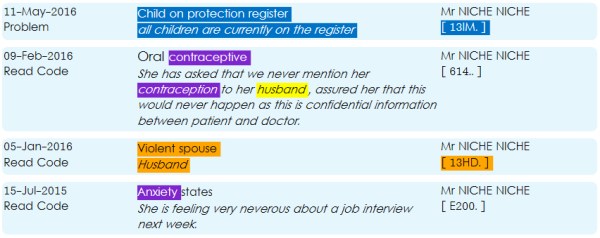
CCGs are responsible for the Infrastructure to support General Practice in terms of IT and local Training capability and capacity varies from area to area, so unless the Practice team has some understanding of what the patient can see through the various record viewers, then they wont understand the consequences of scanning correspondence, without details being attached to the images.  Correspondence may have scanned historically before this became a priority, hence many online records have no valid descriptions on the attachments.  Practice priority is to get the correspondence into the records asap so that if a patient comes into the surgery, the clinician can view the letters or act on the information contained therein.  Bulk adding of correspondence is a common task, followed by summarising of ‘read coded’ information and if a patient has a large record, then often the GP2GP (thats the electronic system for transferring the electronic record) fails.  So someone has to painstakingly read every piece of correspondence to glean the pertinent details and manually code this information.   There are add on software products that can help, but stable infrastructure is required or else this adds further risk if documents cant be accessed by the clinician in the consulting room.


In our practice we have 3 years worth of scanned images from 2006-09 that are unable to be converted into a viewable format.  That was due to the scanning system configuration at the time and long before records access was even considered.  Our CCG paid for the remainder of our historical scanned images to be converted to a readable format.  Many practices have to fund this cost themselves.
As Ingrid Brindle regularly points out, complex patients or their carers often have the best knowledge of their history – she says ‘it’s their life’s work’ and patients can be a great support to help practices correct any inaccuracies.  Patients can help by highlighting all of the pertinent information and checking with their practice that this is:
A. Read coded
B. In a format that is shareable across the health organisations in their area
C. Visible through whatever records viewer a patient chooses to use.

The introduction of Snomed might make it easier for hospital coding to be automatically transferred into GP records but this has been in the pipeline for many years, although expected later this year.

Sorry this was a long post, but as you can hopefully see, this isn’t an easy or quick fix and it shouldn’t be left to individual practices to resolve.  NHS Digital seem to be focussing on front end entry to the NHS through apps and also single identity authentication to remove the need for multiple passwords and sign ins.  They are currently working with existing market providers like Evergreen Life and Patient Access for the records viewing element but its not clear yet how this will impact on records access at a practice level.

Alongside this, CCGs and clinical system/Electronic health record providers are focussing on large scale inter-organisation data sharing, but not direct sharing with the patients.   It will be interesting to see if the launch of the NHS app for accessing all services increases the requests from patients for records access online and how this will be resourced.

#SpreadinNWC

Hi there

This is for Claire @haighclaire and Glenys @cumpstonarchive

I’m sort of messing about a bit, trying something new and then seeking a bit of feedback (I hate that bit already), maybe just a bit of a reaction to see what this blog might generate.

Glenys has said a couple of times – ‘why don’t you write a book’?  This is usually when I’m sharing a story of an event because sometimes, there is a back story to a headline which would make your toes curl.  But that’s maybe for another blog.

I suppose the quick answer is,  I rarely sit down long enough to think through what I want to share.  Although, I am a sharer by nature and like connecting people who have shared interests to help them make their things happen.

So this week during a coaching session, Claire encouraged me, in a very gentle way, to start blogging.  Its raining outside (finally), so I’ve registered with WordPress and I hope to use it to share further experiences through ‘What Lisa did next….’

Earlier this year, I blagged a place on the Innovation Agency’s Coaching Academy for Spread and Adoption programme.  They are recruiting again and I’d recommend it to anyone with an idea or innovation that they want to share.   I say blagged because I’m actually in the North East AHSN patch but I couldn’t see this course in my area, so felt it was worth an application.  I was about to take a sabbatical and test if I could start working in other areas, both geographically and in other sectors, as I was ready to change in career direction.

I hoped the programme would help with one of my regular challenges at work; trying to spread a message about using digital tools, techniques and services to a large majority of people who don’t quite get what I’m talking about.  I know that sounds vague but all I’m trying to achieve is to bring the everyday technology and experience of our life outside of work into General Practice, where I’ve worked as a Practice Manager for 8 years.  I’m talking about the sorts of things we take for granted; we bank and book train tickets, holidays and events online, we chat and network using Social Media, we use ‘phones, tablets, gadgets and devices, software and apps to carry out these activities, yet in the parts of the NHS if you talk about using this type of ‘Digital’ stuff to deliver services or make workload efficient, many people glaze over and then often get confused with IT, Tech, hardware and infrastruture and geekiness – or at least it seems that way in General Practice and in many areas of the NHS in Cumbria.  That’s perhaps understandable given the pressures in General practice where its hard to innovate when practices are struggling to keep going.    I said to a CCIO recently, ‘sometimes, I feel like an alien amongst my Practice Manager colleagues’, they replied, ‘that’s because you are like one, to them’.  Yet, I know this isn’t the case everywhere and I’ve been fortunate enough to work with the Healthier Lancashire and South Cumbria Digital Workstream on the Primary Care Digital Exemplar Programme.  This has provided me with the space to try to develop my message and also to realise that if the context and environment is ready for this message, its heard and spread with enthusiasm. I am meeting like minded General Practice colleagues who are ready to adopt these new ways of working.

By the way, I’m none of the above – neither alien, technically gifted or geeky and I most definitely suffer with imposter syndrome when working alongside truly talented individuals who know about User Experience & Digital Design, Technical architecture and infrastructure and System configuration.

But I do know a fair bit about introducing new ways of working, going at the pace that people can cope with when introducing change, about the need to explain what we hope to achieve and why, also about how to help people learn to use something they feel a bit unsure of.  And I mean both NHS employees and people who use our services.

So that last paragraph helps me a little to understand myself a little better.  I think that I’m able to look for the stuff thats out there, see the opportunity for its use in improvement,  maybe interpret the strategy and then link it to delivery, whilst understanding the pressures and level of competence in general practice.  I’ve no idea what job title you would give to that role.  Any suggestions?  Feedback and reaction most welcome.